The problem
Renewable energy assets produce a constant stream of operational signals, but performance issues are rarely obvious from one metric. BESS, Solar, Wind, and Oil & Gas workflows all need models that can separate normal behavior from degradation, under-performance, and operational risk.
What I built
I led end-to-end ML projects from research through production deployment across renewable and energy assets. The work covered predictive maintenance, degradation control, under-performance analysis, anomaly detection, and market participation strategy support.
- Built predictive maintenance and anomaly detection workflows across multiple asset types.
- Created degradation control models and under-performance analysis for battery storage systems.
- Developed market participation strategy analysis for energy trading optimization.
- Produced asset optimization analyses for Solar, Wind, BESS, and Oil & Gas operations.
- Deployed production models with monitoring and alerting for enterprise clients.
8+
end-to-end ML projects led from research to production
3+
enterprise clients served by production model workflows
Technical shape
The work mixed time-series analysis, domain features, model evaluation, and production delivery. A model was only useful if the surrounding pipeline could explain what it saw and get that signal in front of the right people.
def flag_underperformance(actual_kw, expected_kw, tolerance=0.08):
    ratio = (expected_kw - actual_kw) / expected_kw.clip(lower=1)
    return ratio > tolerance
What changed
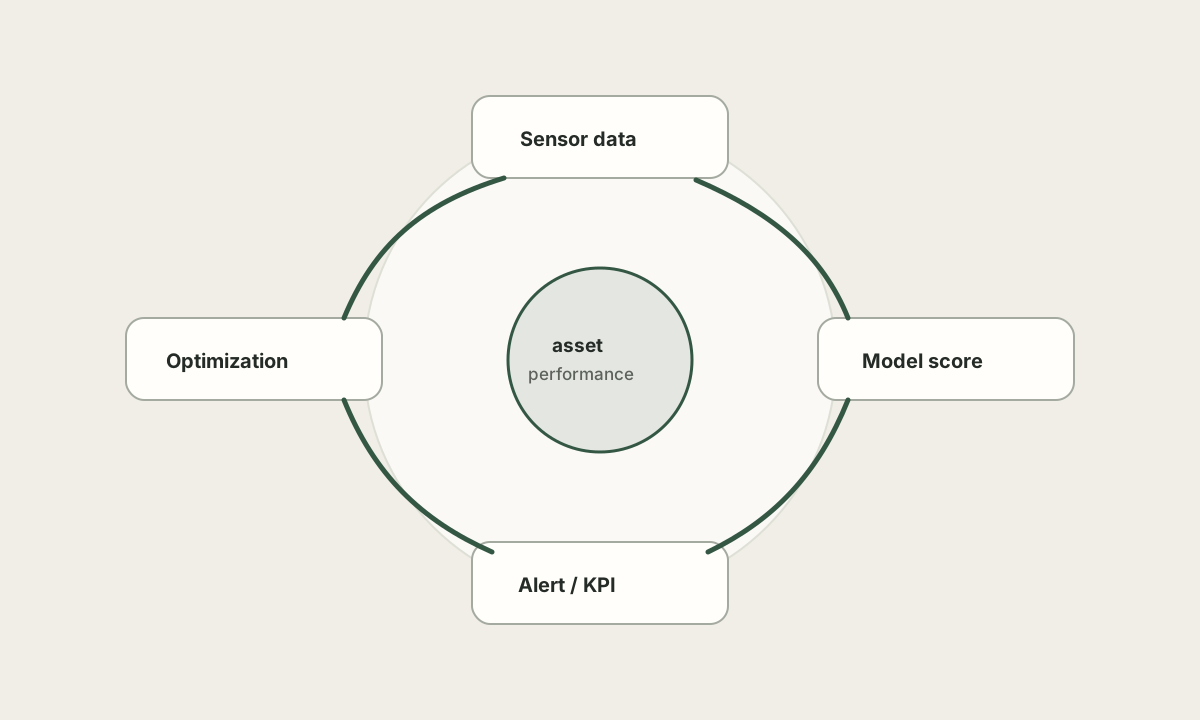
The models helped convert raw operational signals into performance insights, alerts, and optimization opportunities. That reduced the gap between data collection and asset-level decision making.