The problem
Energy analytics platforms collect dense operational data, but the people who need answers often do not want to think in database schemas, dashboard filters, or API payloads. They want to ask direct questions about assets, KPIs, anomalies, and operational context.
What I built
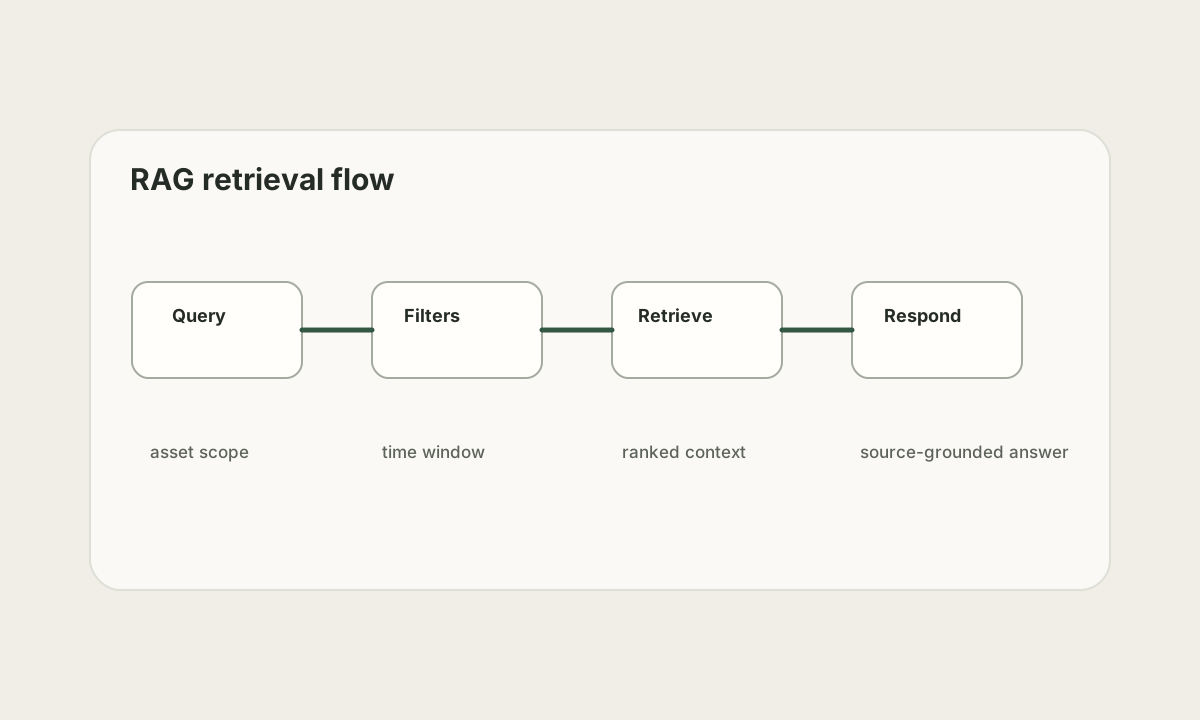
I architected and deployed production RAG systems for enterprise chat applications. The work connected domain-specific knowledge bases, renewable energy datasets, and modern LLM APIs so users could ask natural-language questions without losing grounding in the underlying data.
- Built retrieval flows that connect energy-domain content to conversational answers.
- Integrated Claude, GPT-4, and Gemini into domain-aware interfaces.
- Designed LLM-powered agents for automated data analysis and insight generation.
- Implemented multi-agent task routing for renewable energy workflows.
- Mentored junior teammates on prompt engineering, RAG design, and modern AI architecture.
100K+
monthly enterprise RAG queries supported by production systems
60%
reduction in client analysis time through LLM agent automation
Technical shape
The important pattern was not just sending prompts to a model. The useful layer came from retrieval discipline: clear source boundaries, structured context, failure-aware API behavior, and responses designed for users who need confidence before acting.
def build_context(query, retriever, asset_scope):
    documents = retriever.search(query=query, filters={"asset": asset_scope})
    return "\n\n".join(document.summary for document in documents[:6])
What changed
The chat layer made complex energy data more approachable for client teams. Instead of waiting on manual analysis loops, users could explore operational questions through a conversational interface grounded in the platform's domain knowledge.